Results for ""


Education & Skilling 5 Min Read Feb 05, 2021
AI innovation the new currency of India-ASEAN partnership
 Published By : Samiksha Mehra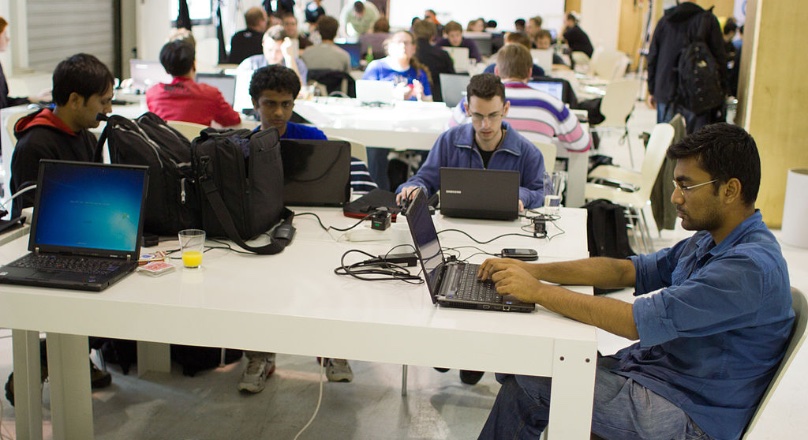
India and ASEAN (Association of South East Asian Nations) member countries have emerged as rising Asian powers in the new millennium while sharing cultural, civilisational and commercial links that go back many centuries. The fast-growing economy and formidable demographic dividend give to this region an immense potential for growth-centric mutual cooperation. It is also the stellar capabilities of the massive youth populace of the region to extend the frontiers of innovation through emerging technologies that gives common ground for multilateral collaboration.
To promote young techies to build AI-driven solutions to common challenges that transcend national boundaries, India hosted the first ever ASEAN-India hackathon in February 2021. The three-day virtual event saw participation of hundreds of students from India and 10 ASEAN countries who banded together in cross-border teams to leverage frontier technologies such as AI and ML to solve real-world problems. Brunei, Cambodia, Indonesia, Laos, Malaysia, Myanmar, Philippines, Singapore, Thailand, and Vietnam sent their delegations to compete in the 36-hour non-stop hackathon.
“When the problems facing us are global, the solutions must also be truly collaborative and multilateral,” righly quoted the External Affairs Minister of India, Shri S. Jaishankar. “It is an event where cooperation is more important than competition,” he added, during the concluding ceremony on 4 February.
Two priority areas of cooperation between India and ASEAN, maritime neighbours and emerging economies, were identified as core themes of the hackathon: Blue Economy and Education. The participants used technologies such as AI, ML, blockchain and analytics to build novel solutions to issues of topical interest to participating nations, such as development of coastal infrastructure, protection of marine ecosystems, sustainable harnessing of marine resources, providing sustained and gainful livelihoods to coastal communities, efficient conduct on online examinations, and so on.
Commending the ideas and out-of-the-box thinking of young problem solvers, Shri Ramesh Pokhriyal Nishank, Union Education Minister said, “On problems related to coastal security, teams have developed innovative predictive modelling using latest technologies like AI and ML approaches on satellite images and huge datasets as provided by Ministry of Shipping. These novel algorithms are expected to further enhance coastal security and may help protect our coastal borders from pirates and terrorist attacks.” Encouraging the scale-up and adoption of these solutions for national good, he added, “I hope that this solution could be taken forward by our Ministry of Shipping and I take this opportunity to request them to look into the appropriateness of the solution and work on it for further improving the proposed solution with these youngsters so that some tangible and meaningful outcomes can be achieved.”
We spoke to the winning teams about the use of AI capabilities in their ideas.
- Coastal security and pirate attacks: Piracy, armed robbery and pilferage are serious concerns for shipping worldwide, including in the coastal waters of South East Asia. The winning team adopted a multi-modular approach to alert the potential target to take pre-emptive action and help track the pirates. Using the data from previous attacks, the team trained a risk assessment model using supervised learning to plot (predictive) risk score of entire ship route with respect to time and location. To detect the attackers even in low visibility, the team trained a mask RCNN inception resnet that is capable of human detection and segmentation on thermal/night vision images. Further, a CNN model is optimized to detect the presence of humans at longer distances using the existing camera network of the ship. In addition, there is also a CNN model capable of detecting and classifying different types of weapons, informs Swapnil Panwala, a member of the team.
- Offshore solar power: Emerging economies of Asia are looking at solar power as the key to their independence from imported energy resources. Teams were challenged to estimate the impact of air pollution on solar power generation and enumerate the cost of lost solar energy due to bad air quality. A’in Hazwani Ahmad Rizal, a teammate from Malaysia, informs that their winning idea manifested in a web-based dashboard that forecasts such costs for any location on the map by comparing all relevant parameters. Rohit Nagraj, another Indian teammate, explains how AI is used to achieve the results. A 3D CNN model predicts air quality using hyperspectral imaging from satellite. Further, a KNN model is deployed to predict the effects of air quality on solar irradiance, while a GAM forecasts air quality and solar irradiance data over the entire following year. Very useful insights can be derived for solar plants by analysing this data.
Also Read | AI innovation is leading the way for India’s young changemakers
Sources of Article
Image by Victorgrigas, CC BY-SA 3.0 via Wikimedia Commons