Results for ""


Healthcare 4 Min Read Jul 26, 2023
AI to transform hearing healthcare and research
 Published By : Anjali Raja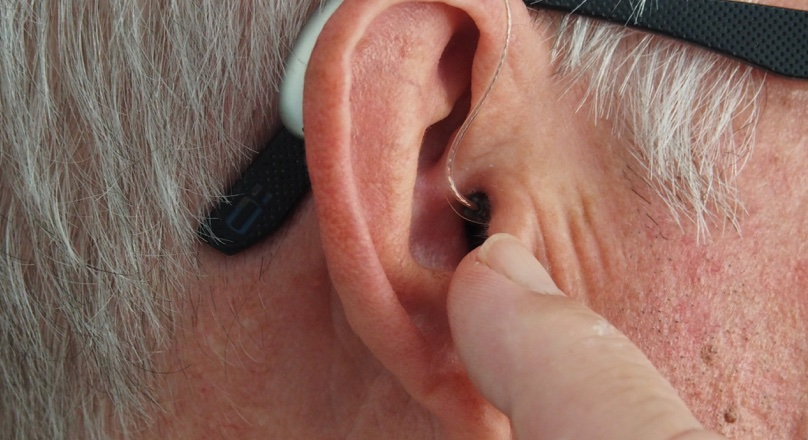
Over the years, hearing aids have been getting increasingly advanced, going from analogue to digital signal processing, from linear to nonlinear gain prescriptions, and from a single general processing scheme for all listening environments to sound classification schemes that adjust the processing to the specific listening environment.
Nonetheless, a fundamental problem remains that hearing aids are designed for the average ear of the average user and are designed using assumptions about what is typical in a given listening environment. Even the individually adjusted, customized fitting performed by a qualified clinician cannot account for every real-life situation the individual hearing aid user experiences.
Hearing aids are designed for the average user in average listening environments, and from the fact that a hearing aid's classification of the listening environment does not always match the user's intent. A knowledgeable clinician may solve some of these problems, but this requires that the hearing aid user can explain their listening experiences and preferences and that the clinician can translate these explanations into appropriate settings, both of which are difficult tasks.
Volume controls, separate adjustments of left and right hearing aids, and multichannel equalizers aim to alleviate these problems. Still, they do not necessarily solve them and require the user to interact with increasingly complex controls. This challenge is the motivation behind using AI to optimize sound.
Recent advances in AI have the potential to transform hearing. Machines have already achieved human-like performance in important hearing-related tasks such as automatic speech recognition and natural language processing.
AI and hearing
The auditory system is a marvel of signal processing. Its combination of microsecond temporal precision, sensitivity over more than five orders of sound magnitude and flexibility to support tasks ranging from sound localization to music appreciation is still without parallel in other natural or artificial systems.
Despite this wealth of data, the diagnosis and treatment of hearing disorders are often problematic. AI can help to disentangle the links between pathologies and perceptual impairments to improve diagnosis and treatment, as well as to advance the understanding of the fundamentals of hearing and provide insight into the causes of complex disorders.
AI in hearing healthcare
The need for improved hearing healthcare is urgent: hearing disorders are a leading cause of disability, affecting approximately 500 million people worldwide.
Many of the most pressing problems in hearing healthcare can be framed as classification or regression problems that can be solved by training existing AI technologies on the appropriate clinical datasets.
- Clinical inference: The use of information about a patient and their symptoms to identify a condition, predict its course and determine the optimal treatment is fundamental to all healthcare. Existing technologies, such as convolutional neural networks (CNNs), are well suited to such problems and have already performed excellently in many diagnostic tasks. Applying these technologies to hearing could bring immediate improvements in diagnosing and treating some of the most common conditions.
- Automated service: Nearly all hearing healthcare services—from initial screening and consultation to follow-up and rehabilitation—are provided in person by highly trained staff using specialized equipment. This 'high touch' model restricts care to places where the required resources are readily available, thus excluding many LMICs and remote locations in high-income countries.
AI's potential
The current model of hearing healthcare improves the lives of millions of people every year. But it is far from optimal: children with middle ear conditions are triaged to watchful waiting while their development is disrupted; people with tinnitus are subject to treatment by trial and error, often with little or no benefit; and the deaf are provided with devices that do not allow them to understand speech in noise or enjoy music.
Despite the potential for AI to produce dramatic improvements, it has yet to make a substantial impact. For this potential to be realized, coordinated effort is required, with AI developers working to turn current technologies into robust applications and hearing scientists and clinicians ensuring the availability of appropriate data for training and responsive clinical infrastructure to support rapid adoption.