Results for ""


AI and human 4 Min Read Sep 30, 2024
User Submission - AI Will Create Jobs in the Future of Work, But Repetitive Roles May Disappear
 Published By : Siddharth Pujara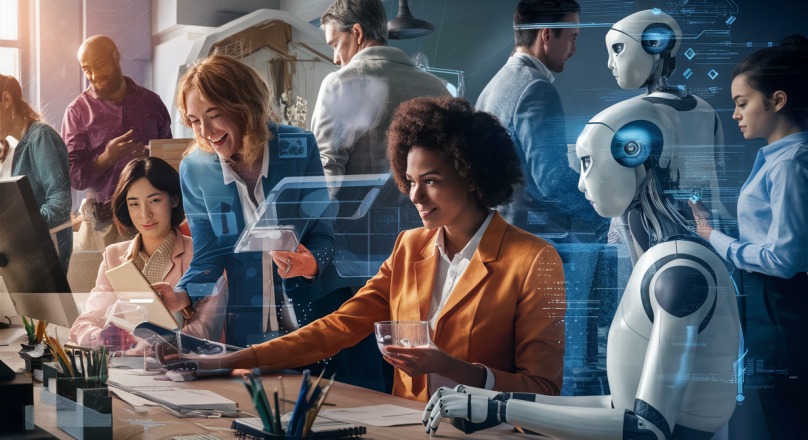
Artificial intelligence (AI) is changing sectors at a rate never seen before as it develops further. Although AI has the ability to create jobs, it will also have a huge influence on repetitious roles, which will cause workforce shifts in a variety of industries. AI will automate routine, rule-based tasks in the workplace, freeing up human workers to concentrate on higher-value jobs like creativity, critical thinking, and problem-solving, according to a top leader at Deloitte.
AI as a Catalyst for Job Creation
AI has been a major factor in the creation of new employment prospects, especially in fields like robotics, data science, and AI research. AI is creating a need for a new set of skilled workers, including data analysts, automation specialists, and machine learning and AI engineers. Deloitte predicts that as more businesses use AI, there will be a growing need for human expertise in managing, implementing, and sustaining these systems.
Additionally, AI is encouraging the expansion of related sectors that also need specialized human knowledge, like cybersecurity, digital transformation consulting, and AI ethics. Instead of displacing human labor, the focus of these emerging professions is on collaborating between humans and AI.
The Impact on Repetitive Roles
While AI promises to create jobs, repetitive roles—such as administrative chores, data entry, and assembly line positions—are at risk of being phased out as automation takes control. According to Deloitte's report, positions that involve a lot of regularity and predictability are more vulnerable to automation, which may lead to job displacement. The head of Deloitte, though, clarifies that this does not imply widespread unemployment. Rather, it will support programs that assist workers reskill and upskill so they can fill positions where human creativity and critical thinking are important.
AI is already using robotic process automation (RPA) to reduce human labor and streamline operations in sectors including manufacturing, banking, and retail. Jobs that involve repetitive tasks that can be automated are particularly vulnerable.but this also provides opportunities for workers to shift into roles that demand more analytical and interpersonal skills.
The Significance of Lifelong Learning and Upskilling
The significance of ongoing professional development and lifelong learning is one of the most important lessons from Deloitte's top executive. With AI developing so quickly, current models of education and training must change to keep up with the demands of the workforce of the future. Deloitte promotes robust collaborations across corporations, governments, and academic establishments to cultivate a labor force equipped to prosper in an AI-driven future.
Employers need to assume accountability for their staff members by providing opportunities for reskilling and training. To ensure that workers can transition into professions that complement AI technologies rather than competing with them, upskilling will be crucial.
Human-AI Cooperation: The Workforce of the Future
Workplaces of the future will be those where humans and AI collaborate. In addition to automating laborious jobs, AI will enable workers to perform more effectively and intelligently. Organizations should embrace AI as a tool that can maximize human potential rather than being afraid of it. AI will take care of monotonous jobs, freeing up people to work on intricate, strategic, and creative problem-solving tasks.
Businesses who successfully incorporate AI into their operations will have a competitive advantage, according to Deloitte, and workers who are flexible and prepared to work with AI will prosper in the new workforce. AI isn't meant to replace people; rather, it's meant to enhance human capabilities and reshape the labor force in preparation for a more inventive and productive future.
Conclusion
Even though AI will unavoidably affect repetitious jobs, it also has enormous potential to improve human labor and create new jobs. AI can be a game changer for businesses and workers alike if upskilling and human-AI collaboration are prioritized. The chief executive at Deloitte highlights that utilizing AI to maximize human potential will be more important in the workplace of the future than having to choose between humans and AI.
Sources of Article
https://fxis.ai