Results for ""


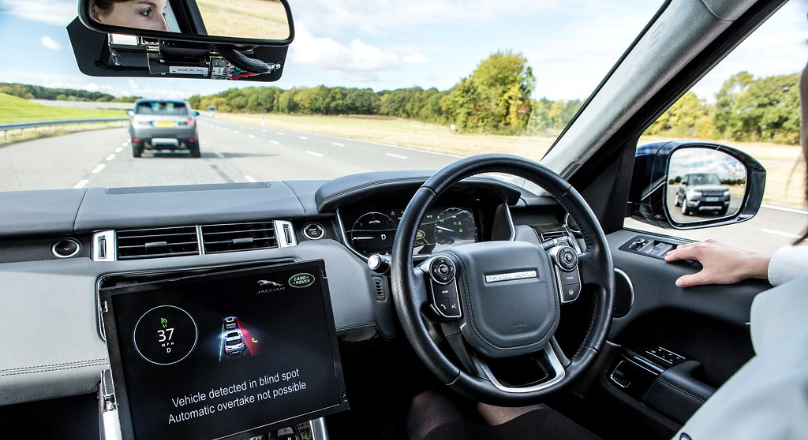
Autonomous vehicles use advanced machine vision to react and drive on various roads. [They are] constantly measuring and analyzing the environment around it, making precise and rational decisions based on its readings, and eventually, resulting in the safest possible maneuver.
Vehicle trajectory analysis is the process of attempting to characterize the vehicle's trajectory, which includes the velocity and acceleration of the vehicle relative to the road surface, as well as the angles and velocity of its parts. The computation and analysis process is affected by many factors, including magnetic field lines, the electronic infrastructure of the vehicle, the path it takes on its way to the destination, as well as how wind affects the path.
Autonomous vehicles are the future of transportation. They are reducing congestion, decreasing environmental impact, and improving safety. They are replacing human drivers and significantly reducing fuel consumption. Beryl Lawrence, Google vice president for automotive partnerships, stated that driving is now "fun and convenient," and called autonomous cars "a step forward in transportation as we know it." According to Lawrence, the technological breakthroughs enabled by the new approach to transportation would allow humans to eliminate the necessity for driving in urban areas.
Nevertheless, several representatives of the self-driving car industry and universities cautioned against taking their products and services lightly. Silicon Valley investor Patrick Pichette, managing partner of Pichette & Partners, said, "What we're doing today is right on the threshold of a breakthrough."
[But the question is how soon can they replace human drivers?] Basing the work on a 2010 study by physicist John Roach that looked at patterns of human
traffic fatalities, the paper said "reducing the mortality rate of human-driven vehicles may be a worthwhile goal."
Before it was co-authored by Esquivel, Gershenhorn, and Rubner, Gershenhorn told The Post that they believed there were "transition periods" between the normal behavior of an autonomous car and a fully autonomous car. "It was not really intended to be a recommendation on how to legislate," he said. "The first moment in a self-driving car is looking at the road, thinking about everything that is going on in front of the vehicle, taking action accordingly and slowly trusting your computer." – Mark Reuss, CEO of nuTonomy.
An automated system — what some have referred to as the "Google car" or autonomous taxi — could be more efficient than it is to operate a human driver. It would also take upless space in the parking garage. It would cut down on carbon emissions. It would give people a much better overall experience.
In my mind, those are all reasons to be excited about autonomous vehicles. In fact, Google's autonomous vehicle program has been steadily improving. Not only does the car get better, it's safer as well.