Results for ""


copyright 5 Min Read Jun 20, 2023
Copyright rules: Grammy will only allow human creators to curb AI use
 Published By : Anjali Raja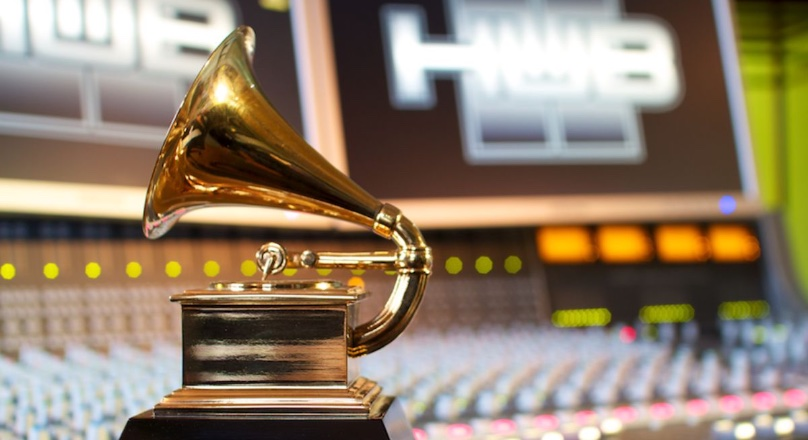
In 1984, a book titled "The Policeman's Beard is Half Constructed" was published. Its author is an artificial intelligence (AI) computer program called Racter — short for Raconteur. The program was written by William Chamberlain and Thomas Etter, who "fed" it grammar rules and vocabulary, but the prose was randomly generated by the program.
Since Racter, other AI systems (AIs) have been authors of books. A recent example is BRUTUS, developed by Selmer Bringsjord and his collaborators. Other art-related fields have seen the rise of AI creators. AARON, a program created in the 70s by Harold Cohen – an art professor and an artist himself – generates drawings and paintings.
The act of creation is traditionally equated with a human being. As the examples above show, however, developments in AI are challenging this notion. We currently have machines that can create books, music, paintings, and other subjects that could eventually come under copyright protection.
Copyright authorship in nations
The definition of authorship varies across nations. In the US, work will be protected by copyright law if it is original in the sense that it is an independent creation and that it displays a modicum of creativity. This was stated by the US Supreme Court in Feist. Creativity in US copyright law seems to imply a human creator necessarily. Even though no definition of authorship is found in the law, it can be argued that the author will necessarily be a natural person under US law.
In the EU, authorship is only addressed in the Software Directive, the Database Directive, and the Rental and Lending Rights Directive. The Software and the Database Directives take a deregulatory approach and leave a great amount of leeway to Member States, allowing them to define the author of a computer program or a database as either the natural person or group of natural persons that created it or the legal person defined as a right holder under national law.
The Australian Copyright Act distinguishes between original literary, dramatic, musical and artistic works in Australia. Case law confirms the need for a human author of the work and links this to the availability of copyright protection.
A few common law jurisdictions – New Zealand, United Kingdom, Ireland, Hong Kong, South Africa and India – have a special regime for computer-generated works, i.e., a work that is generated by a computer "such that there is no human author," or in relation to which the author "is not an individual".
Grammy rules
The Grammy Awards has come up with a statement recently, which said that only human creators are eligible, as the body that grants the world's most recognized music awards seeks to curb the use of AI in the industry.
Telegraph India reported Grammy's statement that a work that contains no human authorship is not eligible in any categories. Music creators must now contribute at least 20% of an album to earn a nomination. Previously, a producer, songwriter, engineer or featured artist on an album could earn a nomination for album of the year, even if the person had a small input.
Two years ago, the Grammys abruptly increased the number of nominees and would once again be set at eight in the four top categories- album, record, song of the year and best new artist for the 66th annual awards scheduled to be presented in early 2024.
Should AI be given copyrights?
In November 2022, OpenAI launched ChatGPT, a free chatbot backed by Microsoft Corp that can generate human-like dialogue based on simple inputs. People in various professions are growing fearful that AI could displace humans. For example, the Writers Guild of America (WGA) and the Screen Actors Guild (SAG) are wrestling with the use of AI in the creative field of screenwriting and acting.
The WGA wants to curb AI in screenwriting, while SAG actors want to ensure its members can control the use of their digital personals and receive proper compensation.
But it is important to think about the role of AI as a creative producer. Is it not unfair to provide credit for AI-generated content to a human being?
A paper submitted by Maastricht University on "Robots ruling the (artistic) world?" states that the copyright rules will depend on the level of involvement. Where a computer program is a tool, the user employs to produce a work, the user is the creator; there is a high level of creative input on his part.
Likewise, programmers will be authors where the final product results from their intellectual endeavors: for example, where the program displays an animation of fireworks whenever a button is pushed, the creative input is from the programmer that created the animation rather than from the user who pushes the button.