Results for ""


AI in Healthcare 7 Min Read Apr 03, 2020
COVID19: Chest CT Solutions Powered by AI Could Be The Key To Effectively Treating COVID19 Cases
 Published By : Sindhuja Balaji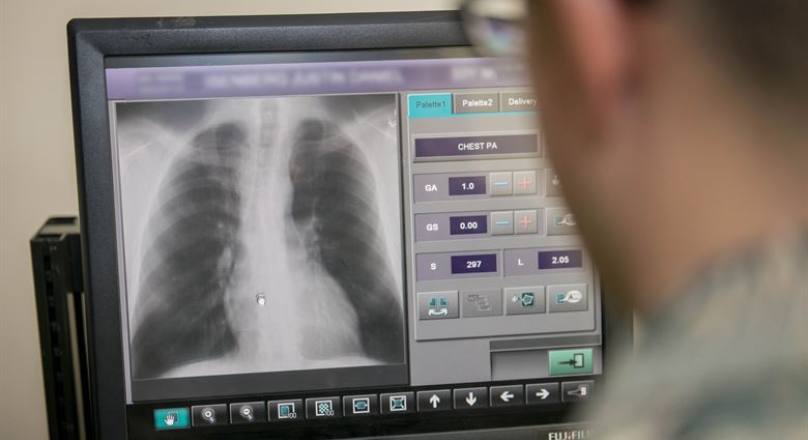
With a rapidly spreading disease like COVID19, every day is a battlefield for a healthcare worker. Not only are they dealing with a multitude of patients whose numbers swell with no warning, but are confounded at the dynamic manner of presentation of symptoms. When cases first started getting detected, the first level of screening was epidemiological – i.e. largely tracking a person’s travel history and contact tracing. As countries move into Stage 3 and 4 of transmission, the symptoms to be wary of are largely to do with respiratory distress, indicative of the virus having reached the lungs.
India has already registered more than 2,000 cases and 53 deaths. Officials believe these numbers will rise in the coming days. This means hospitals across the nation need to brace for a wave of sick people. At a time like this, it is absolutely imperative to utilize technologies that can alleviate the pressure and load on front-line medical workers and support staff, by helping them distinguish between critical cases of COVID19 from the ones that can be quarantined. Specifically, technology can play a critical role in decoding chest X-rays and identifying anomalies in scans caused by COVID19.
Why Are CT Scans Critical Now?
Healthcare workers in countries like China, Italy and Spain that are among the most affected have been sharing their insights and learnings in the past few weeks. Among the most important takeaways is that chest computed tomography (CT) scans are considered most effective in diagnosing COVID19. This early detection can go a long way in saving lives, compared to the commonly used reverse-transcription polymerase chain reaction or RT-PCR, due to limitations in sample collection, test kit performance and efficacy of RT-PCR from throat swab samples. While the WHO initially pushed for extensive testing, a more aggressive approach using CT scans, especially aided by technologies like AI, could be the way for faster diagnosis and treatment with several countries hurtling towards handling cases triggered by community transmission.
Bangalore-based 5C Network, cofounded by Kalyan Sivasailam and Syed Ahmed in 2016, has been working on making radiology more accessible using technology. It allows hospitals and diagnostic centres to directly upload scans to its cloud where 5C Network’s proprietary AI algorithm extracts data and analyses the scans, providing all the necessary information to the specialist. Given the alarmingly low number of radiologists in India - 1 for every 100,000 – this solution improves the level of care to critical patients by providing the data in a matter of minutes to radiologists.
A retrospective study of 112 patients found 54% of asymptomatic patients had pneumonic changes on CT. This shows the ability of radiology to quickly screen and diagnose COVID19, especially in low resource settings in rural areas.
Co-founder Kalyan Sivasailam says, “Radiology must play an active role in Screening (CXR), diagnosis (CT) and Monitoring (CXR and CT) of patients who have COVID19.”
How Can AI Expedite Chest X Rays?
Qure.AI, founded in 2016 by Dr. Pooja Rao and Prashanth Warrier, uses artificial intelligence to interpret clinical scans like Xrays, CT scans and MRIs. Their CE-certified products are built using deep learning technology and trained using millions of images, enabling faster diagnosis and treatment. Their solutions have been deployed in more than 15 countries across a multitude of radiology and healthcare facilities, and has been especially successful in screening TB patients.
Since the outbreak of COVID19, the Qure.ai team has been working on developing solutions that could enable the faster detection of lung anomalies caused by COVID19. The solution, qXR, can automatically generate chest X-ray interpretation reports, detect tuberculosis, chronic obstructive pulmonary diseases, lung malignancies and medical emergencies like lung collapses and cardiac disorders. Now it can additionally interpret an X-ray to detect findings indicative of COVID19 as well as quantify the proportion of lungs affected due to the lesions. This can be used by health care workers for screening COVID19 patients who need to undergo further testing as well as to monitor progression of patients. qXR is CE certified and can interpret chest X-Rays in less than a minute. It is able to detect findings such as ground glass opacities and consolidation indicative of COVID19, localise lesions and indicate if these lesions are bilateral and in which zones, detect the presence of cavities, nodules, pleural effusions, fibrosis and lymphadenopathy to aid the healthcare expert in alternative diagnosis ruling out COVID19 and quantify lesions that can assist in monitoring progression of COVID19 patients. This capability is being used in the USA, India and Italy to determine patients that need to be home-quarantined, tested further or admitted to the hospital and monitor the progression of the lung disease in patients.
Qure.ai has partnered with the San Raffaele Hospital in Italy to deploy these solutions to interpret chest X-rays in seconds. Italy is one of the worst affected countries in this pandemic, with over 13,000 deaths and more than 115,000 affected.
Another company that has devised a specific COVID19 screening software, powered by AI, is Artelus Learning Systems. The company was founded in 2017 by Rajarajeshwari, Pradeep Walia, Vish Durga and Lalit Pant – all veterans in the field of technology, who collectively wanted to harness the power of AI to save people from blindness. Since the outbreak of COVID19 and the rapid escalation of cases in India, the Artelus team has developed an AI-powered COVID19 screening software called X-Net System, using Machine Learning and more than 1.3 lakh images for pre-training, training and testing. The 120K images used for pre-training from NIH, US has a large salience of Asian and Indian population.
If one uploads a chest X Ray (or a even a photo of the X Ray), the system can identify lung anomalies caused by COVID19, pneumonia and tuberculosis. The results derived from reading thousands of X-rays shows that the system can achieve an accuracy comparable to radiologists (above 90% sensitivity and above 80% specificity across conditions). This solution is available offline on a stick that can be connected to any X-ray machine and computer for AI readings. In addition to RT-PCR, X-ray is being added to for quick identification of COVID and this is proving to save time and reduce pressure on the hospital staff and infrastructure. Getting the results of the PCR test may take several hours and the absence or presence of pathological findings on chest X-ray can be used to determine whether to send the patient home till the PCR result report is ready or to keep him/her under observation.
This solution is especially relevant today given that India has only 10,000 radiologists, and it is impossible for them to analyse lakhs of X-rays. Moreover, it helps with the initial segregation of COVID19 cases from the rest at the radiology level, following which adequate steps on patient isolation can be made. This not only avoids needless panic among patients, but also helps hospitals plan their isolation ward facilities accordingly.
The team at Artelus is developing this COVID19 solution in line with data privacy guidelines.
“The data generated from the mass screening that we intend to conduct across the country belongs to the Indian Government. Artelus won't use cloud if the relevant authorities wants they can use it on their servers, we will be glad to bring in the required algorithms. Machine learning models can get even more accurate as it learns from more data. Hence, we will seek permission from the relevant authorities to use anonymised images for further refinement of our code (strictly subject to permission from the relevant authorities),” said the company in a statement.
Sources of Article
Image Source: Misawa Air Base