Results for ""


Surveillance 8 Min Read May 22, 2020
COVID19: Has the pandemic initiated a new era in surveillance?
 Published By : Sindhuja Balaji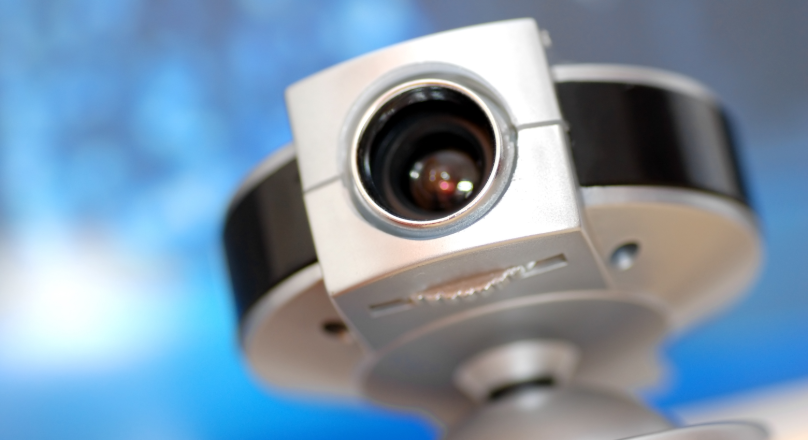
The celebrated Israeli historian and author Yuval Noah Harari, in an interview to BBC’s Hardtalk last week, made an observation that pretty much summed up what the ongoing COVID19 crisis could lead to for the coming times.
“People could look back in 100 years and identify the coronavirus epidemic as the moment when a new regime of surveillance took over, especially surveillance under the skin which I think is maybe the most important development of the 21st Century, is this ability to hack human beings."
He believes that biometric data could lead to systems and machines knowing and understanding human beings better than they know themselves. But are we ready for such a tremendous change? COVID19 has seemingly catalysed the normal shifts in technology adoption, and introduce several aspects of technology into our everyday lives. Suddenly, everyone is discussing contact tracing, surveillance, telehealth, AI in biometrics, and how these developments are part of the new normal. One particular application that is useful as is worrying, is guided surveillance supplemented by Artificial Intelligence.
COVID19 Accelerated The Need for Close Surveillance: Are We Ready?
Think surveillance, think cameras. It’s fairly simple, right? One of the earliest examples of recorded samples for closed circuit television systems (CCTVs) was done in the early 1940s to witness the launch of V2 rockets in Germany. USA brought CCTV surveillance into the fold just a few years later. Today, the video surveillance market is poised to touch nearly $75billion in the next five years. While the rising concerns surrounding public safety have spurred market demand, reports indicate the developments in machine learning and AI have also played a role in increasing the demand for CCTVs. Before ML and AI were so popular, CCTV footage would mainly end up in servers to be manually decoded. Security personnel, police officers and detectives would ideally spend hours trying to find some clue or evidence from CCTV footage if a crime had taken place. Same goes for CCTVs in malls or retail outlets, or anywhere else really. Today, advances in computer vision, facial recognition technologies and advanced analytics have made the data emerging from an intricate network of IP cameras extremely valuable.
And COVID19 is the perfect example. Ever since the outbreak began picking up pace in India, government bodies began aggressively pursuing companies and entrepreneurs who could provide their surveillance technology to track and trace suspected patients. Densely populated states like Uttar Pradesh and Punjab, where cases were rising steadily in the initial weeks of the outbreak require mass surveillance methods, aided by analytics, to understand the movement of people and appropriately take punitive action. As we ride out Lockdown 4.0, with several states cautiously resuming normalcy and resuming activities, it is safe to assume that there are technology offerings in the works that will be designed to track our every move. While these measures could appear extreme, we are battling a novel virus that has already claimed the lives of more than 330,000 people and affected more than 5 million worldwide. In order to ensure healthcare systems don’t collapse altogether under the strain of treating sick people, it is crucial to keep tabs on asymptomatic individuals and those in quarantine.
AI In Biometrics: The Business Applications
While camera-based scrutiny is what most people understand as surveillance, there are several ways in which a person can be tracked. The use of biometrics is one such. There are largely two kinds of biometric applications – physical and behavioural. Physical biometric solutions focus on discernible parts of a person like their eyes, fingerprints etc to collect prints, and this information is transformed into a code that an AI system can then understand. Behavioural systems are far more subtle and can give more insights into a person than they would be comfortable sharing such as his voice, inflections, way of speech, gait, hand gestures and more. These bits of data can be stored in a database, and with a layer of analytics, can be used to deduce an entire personality. Behavioural biometrics is gaining popularity, largely thanks to the rise in machine learning, deep learning and AI technologies. It is believed that using these technologies, behavioural biometrics can procure more than 2000 parameters alone from a mobile device. So far, the commonly tracked metrics include the pressure exerted on a keypad while typing, scrolling & toggling tendencies and the way a person responds to online apps. Machine Learning is then applied to these vast swathes of data collected at one’s fingertips, and continuously enhance user experience based on these behaviour patterns. Over time, as a person’s mannerisms change, the machine learning algorithms adapt and sharpen the user experience across platforms. This elaborate process is set to restructure the authentication landscape significantly in the years to come.
COVID-Tracking Apps and Privacy Concerns:
So the tech is present, and its getting smarter thanks to AI. However, with COVID19, the debate on personal data privacy has once again picked up the pace. Several countries have launched their own tracing and tracking apps like China, South Korea, Israel, Singapore, Australia, India and many European nations. India’s COVID tracker app Aarogya Setu has been downloaded 100 million times. Even as the nation gradually emerges out of lockdown, several companies and government agencies are making the app compulsory for people. As offices reopen, multiple measures like temperature checks and wearing masks are being enforced, in addition to every employee having the app installed on their phones. Even as flight operations resume from May 25, passengers need to either show the Aarogya Setu app or some other form of personal declaration before they can be permitted onboard.
As we settle with the idea that this virus is here to stay, measures such as these are vital in ensuring the safety of people in public spaces. Surely, no one is second guessing that. Despite the soaring popularity of the Aarogya Setu app, there are questions regarding how it could maintain user privacy. There are concerns over mixing up crucial health data and surveillance information, potentially leaking this data and creating conditions ripe for misuse such as hacking. The use of Bluetooth and GPS to track individuals makes the app quite privacy-invasive.
Course Correction Needed In Gaining Meaningful Consent & Transparency:
Currently, in India, public health supersedes personal privacy. But this doesn’t have to become the norm. Once the crisis abates, there should be a discourse on the use of data, technologies to collect the data and its purpose.
The World Economic Forum came out with the WEF COVID Action Platform recently. With inputs from human rights lawyers Wafa Ben-Hassine & public policy lead for Element AI Philip Dawson on technology provisions for COVID19 to respect fundamental human rights, there are four major recommendations as part of the Global Future Council on Human Rights and the Fourth Industrial Revolution.
- States to recognise international human rights as the foundation for technology governance: Through government-mandated actions, limiting human rights is justified only if these actions are necessary and proportionate. It is important that technology measures pertaining to managing COVID19 keep going back to this point, and not become draconian applications.
- Draw on global best practices: Best practices such as the Toronto Declaration, Access Now’s recommendations for digital rights respecting COVID19 response and EC guidelines on using technology to mitigate COVID19 whilst not impinging on privacy are some of the standards organisations must apply and integrate, and for governments to fashion their own models upon.
- Transparency: This is extremely crucial. South Korea is one of the few countries that has gained acclaim worldwide for managing the COVID19 efficiently. They too had a tracking app among other measures to ensure the public was safe. However, they maintained a level of transparency and ensured constant communication with the public, which enhanced the level of trust and helped authorities execute their tasks efficiently.
- Data minimisation & defining limitations: Collection of healthcare data en masse involves large sections of the population, and a significant number of them require more protection than others like elderly, sick and children. Consulting global best practices to develop home grown models would be ideal.