Results for ""


Govt. of India 6 Min Read Aug 21, 2020
‘Data is a national asset’: Minister Ravi Shankar Prasad
 Published By : Soumitra Dasgupta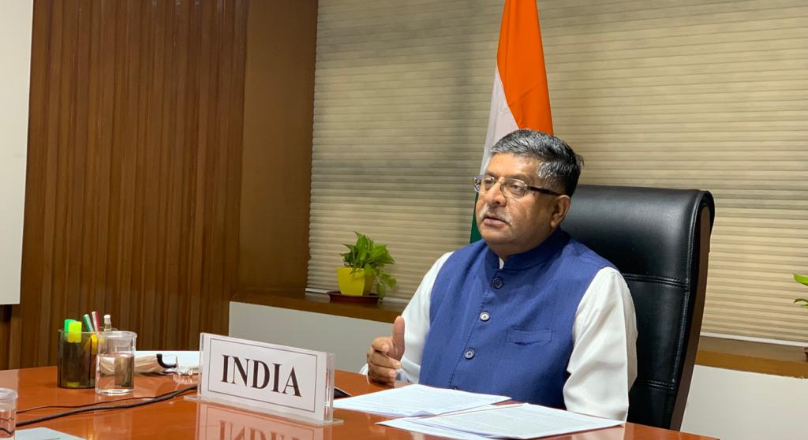
At the Curtain Raiser of the NASSCOM XperienceAIVirtual Summit, to be held early next month, we had the Hon’ble Union Minister Shri Ravi Shankar Prasad sharing his ideas about what the crisis has taught us and why we should look upon it as a great opportunity. Entrepreneurial Indians are doing so already and transforming the challenges to create the NEW NORMAL which has become cliched because that’s where we are right now. Oxygen is cliched too!
At the very outset, he was rather emphatic about why and how we should continue to follow social distancing norms. It was interesting to note that he lowered his mask only the moment before he set out to speak. That should be a learning for all – the mask needs to be worn all the time and cannot simply hang in there loosely like a fashionable accessory. And, if someone near us tests positive, the necessary protocols leading to quarantine and subsequent testing need to be followed in all seriousness.
A great mission requires time to build momentum and if we stick to the avowed plan, then the ecosystem rallies round too and that’s how great things happen. A case in point is the Digital India initiative that was launched 5 years ago and today it’s a movement with few parallels. The JAM trinity sits proudly and forms the bulwark of the tech stack in India on which millions of applications are being built to enable financial inclusivity, healthcare delivery, digital education, agricultural support among many others. It’s all happening but in silos or pilot projects.
The NASSCOM report, “Unlocking Value from Data & Ai – The India Opportunity” which he launched at the Virtual Curtain Raiser of the NASSCOM XperienceAI Virtual Summit mentions 10 different kinds of data sets that the Government needs to focus on. They are in the areas of finance, healthcare, farm, grain value chain, land records, road traffic, weather, satellite imagery, power & grid, and education. It states clearly how we can bring all of these together. We need an integrated approach that will leverage data meaningfully and through AI-led technologies that will lead to value creation to the tune of 500 billion dollars. It goes on to state in great detail how this value can be unlocked through a structured approach with strong governing principles doubling up as a moral compass. Misuse of data not only erodes trust but leads to disastrous consequences as well. He said amidst much fanfare and the thousands of social media retweets, later on, gave their ayes – Data is a National Asset.
That, it doesn’t seem like a loon-shot and appears overwhelming, the Minister pepped up his reasoning by citing the Digital India example. It’s doable if we put our minds and hearts to it, and as Indians, on both fronts, we are adequately provided for. Recently, MeitY, as part of a contest, had invited applications for indigenous video-conferencing products, and would you believe it, the MeitY inbox was choc-a-bloc with 2000 entries, including those from the hinterlands. It may be too early to declare but I can’t help wondering if the impervious line between the privileged and the underprivileged that we are habituated to, may actually beshowing early signs of blurring.
The Arogya Setu app was created in a matter of days and four months down the line it has 15 crores registered users – a giant leap in the face of grim adversity. There are 11 lakh post offices that had offered their services to neuter the challenge of last-mile connectivity and delivered essential items to the remotest corners of the country. When was the last time any of us visited a post office? It’s hard to believe that a humble post office could have played an instrumental role in saving the nation? We keep referring to collaboration and ecosystem players, well, this is a stellar example of how different parts come together to form the bigger picture.
PM Modi announced 170000 Cr relief to the under-privileged, out of which 90000 Cr has been transferred through the DBT Scheme. If the post office example was about human connect then this one is about augmentation. Tech + humans were able to save millions of lives. It’s an example yet again, of how “the pandemic wasn’t allowed to go waste.” These referencesare hugely inspirational and lend great credibility to the basic premise that innovation can come from the most unexpected of sources and in very quick time.
Almost 10 global companies have shifted their manufacturing bases from China to India in the last few months and this is a clear testimony that the world has bestowed greater faith and confidence in Indian capabilities than ever before. We need to harness these opportunities and aim for very high goals.
The Minister’s address was peppered with many such examples and he remained emphatic on the incredible talent that India has and what it continues to achieve. The government will roll out optic fibre cables in 6 lakh Indian villages in the next 1000 days and when that happens, it’ll be one of its kind in terms of digital infra creation. Also, the productivity-linked incentive that has been announced in mobile manufacturing is likely to generate revenue worth 12 lakh crores in the next few years.
The pandemic was greatly unsettling, sure, but it has also opened up a whole new line of innovative thinking that’s a major step-up in realizing the 5 trillion dollar economy by 2025 that PM Modi had envisioned.