Results for ""


Wildfires 6 Min Read Jul 29, 2024
User Submission - Harnessing AI to Decode the Behavior of Wildfires
 Published By : Dr Vishal Sharma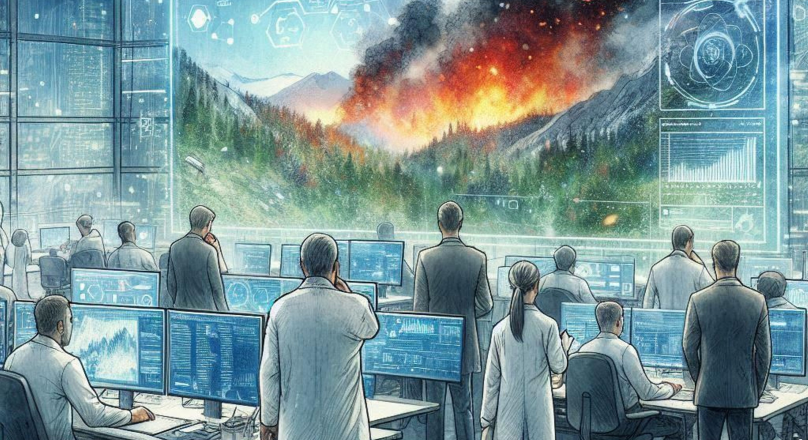
In recent years, India has witnessed a significant rise in wildfire incidents, with devastating consequences for both the environment and human health. In 2024 alone, nearly 9,000 forest fires were recorded across the country in April, marking the highest number of incidents for any month. Uttarakhand has emerged as the hardest-hit region, with over 2,154 fire incidents reported by June 10, 2024. These fires have caused extensive damage, destroying properties worth crores, killing wildlife, and filling the air with smoke for days in several tourist areas. The increasing frequency and intensity of wildfires in India as well as in the world, are largely attributed to rising temperatures and prolonged dry spells, exacerbated by climate change. As the climate changes, we are experiencing wetter winters and drier summers, along with more intense heat. These conditions create an environment that is highly conducive to large wildfires. These wildfires not only degrade air quality and devastate properties but also pose severe health risks and disrupt atmospheric compositions. This alarming trend underscores the urgent need for advanced tools and technologies to predict and manage wildfires effectively
In light of these growing challenges, the deployment of advanced AI models for predicting wildfire spread and smoke dispersion has become essential. Working in this direction, researchers at the University of Southern California (USC) have developed a groundbreaking method to predict wildfire spread with high accuracy. By integrating satellite imagery with artificial intelligence, their model represents a potential breakthrough in wildfire management and emergency response. This innovative approach is detailed in an early study published in the journal “Artificial Intelligence for the Earth Systems”. The USC model uses satellite data to monitor a wildfire’s progression in real-time, feeding this information into a sophisticated computer algorithm that can forecast the fire’s likely path, intensity, and growth rate.
Challenges in Developing an Accurate AI Model:
Developing an accurate AI model for predicting wildfires is an incredibly complex task due to the chaotic and nonlinear nature of wildfires. Here are some of the key challenges involved:
Complex and Chaotic Nature: Wildfires are inherently unpredictable and involve numerous variables that interact in complex ways. This makes it difficult to create a model that can accurately predict their behavior.
Intricate Processes: Wildfires involve a series of intricate processes. For instance, the ignition of fuel such as grass, shrubs, or trees leads to complex chemical reactions that generate heat and create wind currents. These reactions and currents can vary significantly depending on the type of fuel and its condition.
Influence of Topography and Weather: The behavior of wildfires is heavily influenced by the topography of the land and the weather conditions. Factors such as the slope of the terrain, the presence of natural barriers, wind speed and direction, humidity, and temperature all play crucial roles in how a fire spreads.
Variable Moisture Conditions: The moisture content of the environment is another critical factor. Fires tend to spread slowly in moist conditions but can move rapidly in dry conditions. This variability adds another layer of complexity to modeling efforts.
Advanced Computing Requirements: To accurately model wildfires, it is necessary to account for all these different factors simultaneously. This requires advanced computing capabilities, including high-performance computing systems and sophisticated algorithms that can process large amounts of data and simulate complex interactions.
Hence, creating an accurate AI model for wildfires involves addressing the chaotic nature of fires, understanding the intricate processes involved, considering the influence of topography and weather, accounting for variable moisture conditions, and utilizing advanced computing resources. Each of these elements presents its own set of challenges, making the task both demanding and essential for effective wildfire management.
AI Model Leveraging 'Reverse Engineering' for Wildfire Prediction:
Researchers have utilized the concept of ‘reverse engineering’ to develop an AI model for predicting wildfire behavior i.e., by understanding how past fires behaved, they aimed to create a model that anticipates how future fires might spread. The process began with the collection of historical wildfire data from high-resolution satellite images, providing detailed insights into past wildfire behavior. By meticulously studying this data, the researchers tracked how each fire started, spread, and was eventually contained, revealing patterns influenced by various factors such as weather, fuel (e.g., trees, brush), and terrain. They then trained a generative AI-powered computer model known as a conditional Wasserstein Generative Adversarial Network (cWGAN) to simulate how these factors influence wildfire evolution over time. The cWGAN model was taught to recognize patterns in the satellite images that correspond to wildfire spread. To evaluate its predictive accuracy, the model was tested on real wildfires, and the researchers were impressed by its performance, as it showed promising results in predicting real California wildfires. By reverse engineering past wildfire data and leveraging advanced AI techniques, the researchers have developed a promising predictive model that can help in better understanding and managing future wildfire risks.
Final Thought:
In conclusion, the increasing frequency and intensity of wildfires, both in India and globally, highlight the urgent need for advanced predictive tools and effective management strategies. The integration of AI in wildfire prediction marks a pivotal advancement in our approach to managing and mitigating the devastating effects of wildfires. The innovative method developed by USC researchers, which combines satellite imagery with advanced AI algorithms, offers a powerful tool for forecasting wildfire behavior in real-time. As global warming continues to exacerbate wildfire conditions, such technology becomes increasingly vital in safeguarding lives, property, and the environment. By providing more precise and timely data, this AI-driven model enhances the effectiveness of firefighters and emergency responders, paving the way for more efficient and informed wildfire management strategies and potentially saving lives and reducing the devastating impacts of wildfires on communities and the environment. As we face the escalating challenges of climate change, embracing such technological advancements is crucial in our efforts to protect communities and preserve natural landscapes from the growing threat of wildfires.
Sources of Article
Journal of Artificial Intelligence for the Earth Systems