Results for ""


AI in Healthcare 5 Min Read Apr 04, 2024
NEC and Tokyo Medical and Dental University harness AI to detect causes of chronic lower back pain
 Published By : Milin Stanly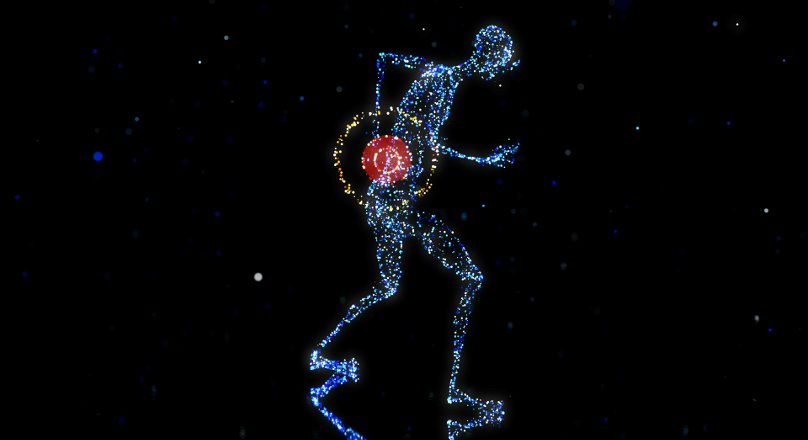
Chronic back pain has been a prevalent problem related to work interruption, emotional distress and risky drug and alcohol use. In this scenario, the NEC Corporation and Tokyo Medical and Dental University have developed a technology to aid self-care for chronic non-specific lower back pain (CLBP) by harnessing the power of Artificial Intelligence to monitor image and interview data taken using smart devices. This allows people with chronic back pain to seamlessly check their lower back condition and see the potential causes and recommendations for customised exercises, irrespective of the time or location.
The significance of AI in preventing CLBP
According to a 2022 study by the Ministry of Health, Labour and Welfare of Japan, lower back pain is one of the major subjective symptoms of illness or injury in Japan for both men and women.
Lower back pain often becomes chronic and is considered a grievous health issue that substantially damages life functions. At the same time, it can also trigger issues like increased social security costs for medical and nursing care benefits. Nevertheless, to enhance the symptoms of CLBP, it is essential to visit the clinic many times a month frequently. Most people do not receive suitable services because of location and time constraints.
Since the population continues to age, technology has great potential to encourage proper exercises that improve symptoms and prevent the worst case of CLBP.
The technology was developed using the NEC’s state-of-the-art AI, such as 2D and 3D human pose estimation technology, abductive reason technology, and TMDU’s medical knowledge. Based on the images of a user who took images using a smart device, the technology automatically analyses and estimates the human skeletal posture, evaluates the condition of every body part, and estimates the reason for CLBP. It also suggests an exercise program that is handmade to the symptoms.
Features of the technology
Extreme accuracy in human pose examination- if the images are taken using a smartphone or tablet, they would be from different angles. Hence, conventional technologies using images may distort skeletal structure due to the varied shooting angles, leading to inaccuracy. Here, the 2D/3D human pose estimation technology developed by NEC becomes a game changer, as it is able to estimate skeletal structure while considering the shooting angles. It helps in getting highly accurate human pose estimation, even for images clicked from different angles.
Assessing the conditions of body parts with high precision—To learn the cause of CLBP, physical therapists and other specialists monitor each movement, such as forward and backward bending and rotation, and evaluate the condition of every body part, like insufficient, moderate, or excessive joint flexion, as per the relationship between body parts, such as the angle between the pelvis and thighs and the relationship between body parts and back shape.
Traditional methods evaluate the condition of every body part by calculating the relationship between body parts according to the human skeletal data estimated from the images taken. However, their accuracy is limited due to their inability to consider the relationship between body parts and the shape of the back.
NEC has built the technology to estimate the shape of the back accurately from images and consider the relationship between the body parts and back shape. It will help evaluate the condition of every body part with the same greater accuracy.
Rapid estimation of the reason for CLBP—To discover the cause of CLBP, it is significant to explore the physical problems from a kinetic perspective that can act as the cause, for example, “excessive lumbar flexion” according to the data on every individual’s attributes, like age, gender, and lifestyle, and observable information like symptoms. Still, this develops many combinations, and conventional inference techniques need many hours to determine the cause.
NEC’s proprietary abductive reasoning technology, which uses a Satisfiability Assessment Problem (SAT) solver, is crucial here. It helps estimate significant causes of chronic low back pain rapidly, within an average of 10 seconds, based on the image and interview data. Additionally, a knowledge base is created based on TMDU’s medical knowledge that includes the condition of every body part, interview data, and the reason for chronic back pain. It enables greater accuracy and comprehensive estimation of the causes of chronic back pain.
Moreover, an exercise program for improving CLBP is offered on a user’s device based on the presumed cause of pain. As the exercise programs are provided in video, people with CLBP can perform them at home.
Sources of Article
- https://www.nec.com/en/press/202403/global_20240321_01.html
- Photo by julien Tromeur on Unsplash