Results for ""


XperienceAI 4 Min Read Sep 04, 2020
Xperience AI Virtual Summit: Indian healthcare at an inflection point
 Published By : Sindhuja Balaji
In April 2019, I listened to Dr. Indu Bhushan speak about the National Digital Health Blueprint and the need for a federated IT architecture to bind the most important pillars in Indian healthcare. At the time, nearly 13,000 hospitals were empaneled with Ayushman Bharat with the goal of reaching 50 crore Indians. April 2020 – India was bracing for the worst healthcare crisis in over a century as COVID19 cases started to climb across India at an alarming rate. We’re now nearly 6 months into the pandemic in India, and we’re far from over. Even as India emerges as the new COVID hotspot globally, it has been a time of immense change and catapulting nearly a decade ahead in terms of digitization.
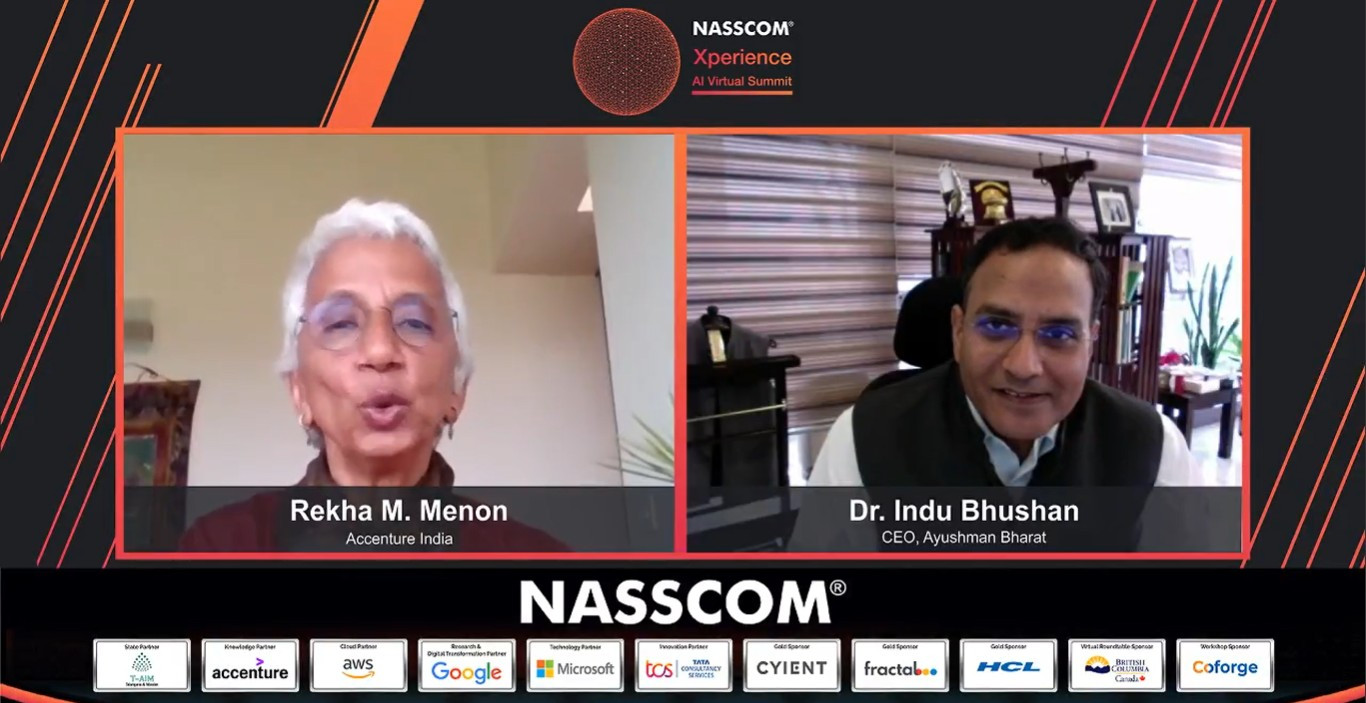
While the gravity of this pandemic and its effects cannot be discounted, it has definitely accelerated the pace of innovation and collaboration for industry, says Dr. Indu Bhushan, CEO of Ayushman Bharat who was engaged in an informative fireside chat with Rekha Menon, Senior Managing Director, Accenture India and Chairperson, NASSCOM.
One of the most significant outcomes of this pandemic was the shift to telehealth. On 15th August, PM Modi launched the National Digital Health Mission, with a keen emphasis on creating a national digital health ecosystem. With citizens as the main focus, the NDHM aims to provide healthcare stakeholders easier access to services especially telemedicine, patient records, hospital administrative records. It also aims to do away with multiple threads of communication with regulators and aggregate it on one platform instead. This federated structure will also help policy makers by providing them access to relevant data and research on disease patterns, and guide them to making evidence-based findings. By utilizing the robust setup of PMJAY, the NDHM aims become India’s most diverse healthcare ecosystem enabler, built on the backbone of the latest technologies like AI. This can lead to better patient outcomes, care protocols, access to healthcare, faster diagnosis and overall change management in healthcare.
Integrated data strategy is absolutely essential to make this happens, says Dr. Bhushan. This system will link doctors, hospitals, pharmacies, diagnostic labs and even AYUSH centres. Making data interoperable and able to communicate with one another will establish the system’s ultimate purpose and efficacy. To achieve this, NDHM is being developed with security by design, not an afterthought. A data management policy is also in the works, and open for public feedback until September 20th, 2020 where collection, storage and usage of data, driven by explicit and detailed consent, will be decided based on public opinion.
This is by no means a small task. Dr Bhushan says, “Working on a greenfield project is simpler in the sense that we can build everything from ground up. But building a system like NDHM requires integrating with existing infrastructure and this comes with its own challenges. But this is where the true triumph in bringing about change lies.” And this needs to be driven by private sector for largescale adoption and enhancing access. To this intention, a sandbox has been created for various private sector IT players to develop systems to deliver the best customer experience. So far, 168 applications have been received in just a week of opening applications. To carry forward an ambitious plan of a national healthcare network is not possible without the support of the IT sector, as India is entering a new era in tech-driven and tech-enabled healthcare management.
Sources of Article
Freepik