Results for ""


Healthcare Aug 18, 2022 CANADA
AI and Deep Learning to work on diagnosing birth defects
 Published By :
IndiaAI
Published By :
IndiaAI
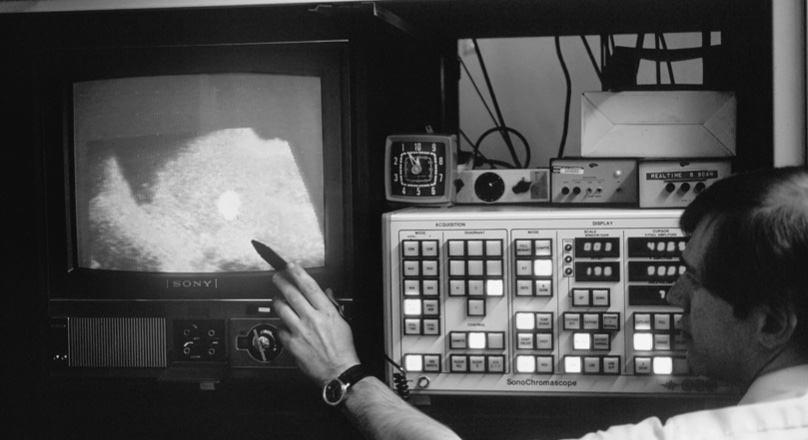
Canadian researchers have found that AI-based deep learning can be used as a tool for the early identification of birth defects. A team of the University of Ottawa in a proof-of-concept pioneered the use of a unique deep learning model as an assistive tool for the rapid and accurate reading of ultrasound images.
The study aimed to demonstrate the potential of deep learning architecture to support the early and reliable identification of cystic hygroma from first-trimester ultrasound scans.
Cystic hygroma is an embryonic condition that causes the lymphatic vascular system to develop abnormally. It is a rare and potentially life-threatening disorder that leads to fluid swelling around the head and neck. It is documented in approximately 1 in 800 pregnancies and 1 in 8000 live births.
Ultrasound is critical in the observation of fetal growth and development. However, small foetal structures, involuntary fetal movements and low-quality image generation make image acquisition and interpretation challenging. The research group wanted to test how well AI-driven pattern recognition could do the job.
They could use the same tool for image classification and identification in the ultrasound field with high sensitivity and specificity. In addition, this approach developed by the team could be applied to a range of other fetal anomalies typically identified by ultrasonography.