Results for ""


Astrophysics May 12, 2021 UNITED STATES (USA)
High-res cosmological simulations clear a roadblock in astrophysics
 Published By :
IndiaAI
Published By :
IndiaAI
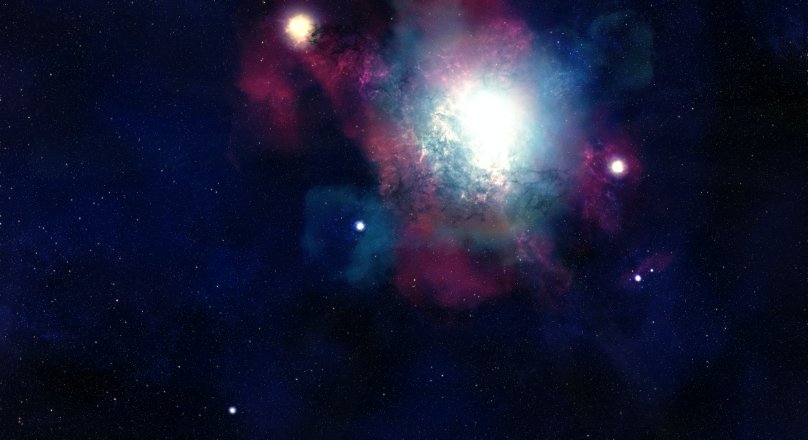
Astrophysicists have used machine learning (ML) to create stimulations of vast, complex universes in a fraction of the time it would take to make them through conventional methods. The researchers who made this breakthrough published the study in the Proceedings of the National Academy of Sciences.
“At the moment, constraints on computation time usually mean we cannot simulate the universe at both high resolution and large volume,” says study lead author Yin Li, an astrophysicist at the Flatiron Institute in New York City. “With our new technique, it’s possible to have both efficiently. In the future, these AI-based methods will become the norm for certain applications.”
The algorithm studies the scans of small regions of space in high and low resolutions. The algorithms teach themselves how to upscale these models from low-resolution version and match the details with high-resolution version. Together combined, the algorithm can generate super-resolution simulations containing up to 512 times as many particles.
The algorithm saves a lot of time. Conventional programs would take almost 600 hours to create hi-res stimulations with the help of a single processing core. However, with the help of the algorithm, this process only takes 36 minutes.
When the researchers fed larger data, the results were even more astounding. They fed the algorithm a piece of the universe 1,000 times as large with 134 billion particles and it churned out results in only 16 hours on a single processing unit.
Li is a joint research fellow at the Flatiron Institute’s Center for Computational Astrophysics and the Center for Computational Mathematics. He co-authored the study with Yueying Ni, Rupert Croft and Tiziana Di Matteo of Carnegie Mellon University; Simeon Bird of the University of California, Riverside; and Yu Feng of the University of California, Berkeley.
These simulations are important for the astrophysicists to predict how the universe would look through different scenarios; for example, if the universe is stretching due to being pulled apart by dark matter. These stimulations' findings are then verified by observing the universe through telescopic observations.
Reducing the time it takes to run cosmological simulations “holds the potential of providing major advances in numerical cosmology and astrophysics,” says Di Matteo. “Cosmological simulations follow the history and fate of the universe, all the way to the formation of all galaxies and their black holes.”
For the time being, the algorithm can only capture the dark matter and the force of gravity, two of the most prominent forces that exist in the universe. Gravity is the universe's most dominant force at large scales while the cosmos is made up of 85% of dark forces. However, the stimulations are not dark forces but are trackers that show the movement of dark forces through the universe.
The algorithm uses two neural networks, known as generative adversarial networks (GANs), that are trained on a database and run calculations using the information to study and predict how gravity would move dark matter over time. As the network works, it learns and progresses. Of the two GANs, one takes a low-res stimulation of the universe to generate high-res models and the other tries to tell those simulations apart from ones made by conventional methods. Over time, both neural networks get better and better until, ultimately, the simulation generator wins out and creates fast simulations that look just like the slow conventional ones.
“We couldn’t get it to work for two years,” Li says, “and suddenly it started working. We got beautiful results that matched what we expected. We even did some blind tests ourselves, and most of us couldn’t tell which one was ‘real’ and which one was ‘fake.’”
The algorithm has been trained on a small dataset however, the GANs have managed to accurately replicate the large-scale structures that only appear in enormous simulations. While currently, the model doesn't focus on black holes, supernovae, etc, the researchers plan to expand their algorithm and improve accuracy.