Results for ""


Judiciary Jul 16, 2021 INDIA
IIT-D launches new lab on AI For Judiciary
 Published By :
IndiaAI
Published By :
IndiaAI
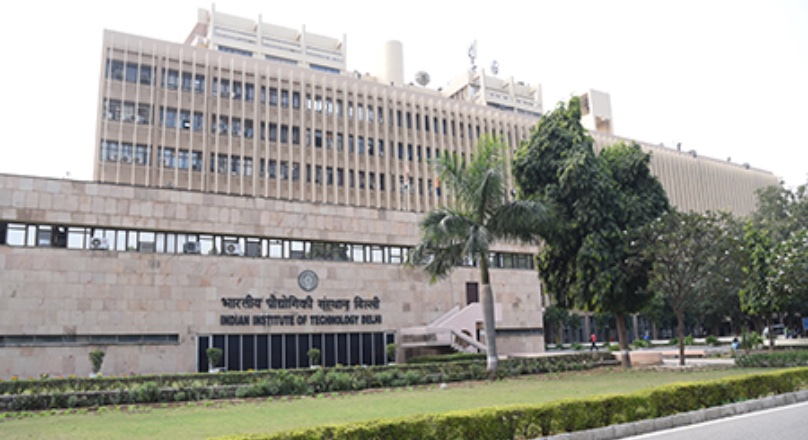
The Indian Institute of Technology Delhi has launched the Universal Justice Foundation (UFJ) lab facility on Artificial Intelligence for Judiciary. This is a step further to welcome the use of technology in the legal and judicial sector. The lab was inaugurated by Justice S Ravindra Bhat of the Supreme Court, who also chaired a discussion on Modeling, Data and AI based Innovations in Judiciary.
This institute has already set up a Centre of Excellence for Law & Technology and is also in the process of signing an MoU with the National Law University (NLU) Delhi to collaborate on the entire gamut of research and innovation activities: joint projects, innovations & start-ups, outreach & courses. IIT-D and NLUD will be working closely on various aspects related to the Law and Technology.
IIT Delhi has expertise in several areas such as Operations Research, Management Science, Machine Learning and other data/modeling based methods that can work on problems around judicial delays and other problems at the intersection of Law & Technology. Some of this research is already going on as a part of the Daksh CoE on Law & Technology at IIT Delhi.
While addressing the event, held on 7 July, Hon'ble Justice Bhat shared his experience on how technology has improved data management and the time-consuming paper process in e-courts. Simultaneously, he also highlighted the corresponding limitations and ethical issues of using technology. “We must craft the safeguards around the use of AI for public function and ensure that the element of human discretion remains wherever required and definitely at each level where important decisions are made. This will ensure that at the very least discriminatory decision making can be appealed and responsibility determined. Ultimately technology must aid judicial functioning and accessibility and not create ground for further exclusion,” he said.